


We had the chance to attend SlatorCon in London and LocWorld in Dublin, where our CEO, Gabriel Fairman, opened the conference with a simple idea that keeps appearing in every interaction with clients and partners:
We are entering the age of builders.
Not because everyone suddenly became a software engineer, but because building has never been more accessible. A few years ago, creating software, automations, or AI experiences required specialized teams and large budgets.
Today, a project manager can create an AI workflow. A localization team can build automations that would have required engineering support not long ago.
The question is no longer who has access to AI. Everyone does. The question is who is willing to rethink how work gets done.
That's why many of the updates we're shipping today focus on flexibility and giving teams more control over how they build.
And with that, let's take a look at what's new.
Workflows That Adapt to You
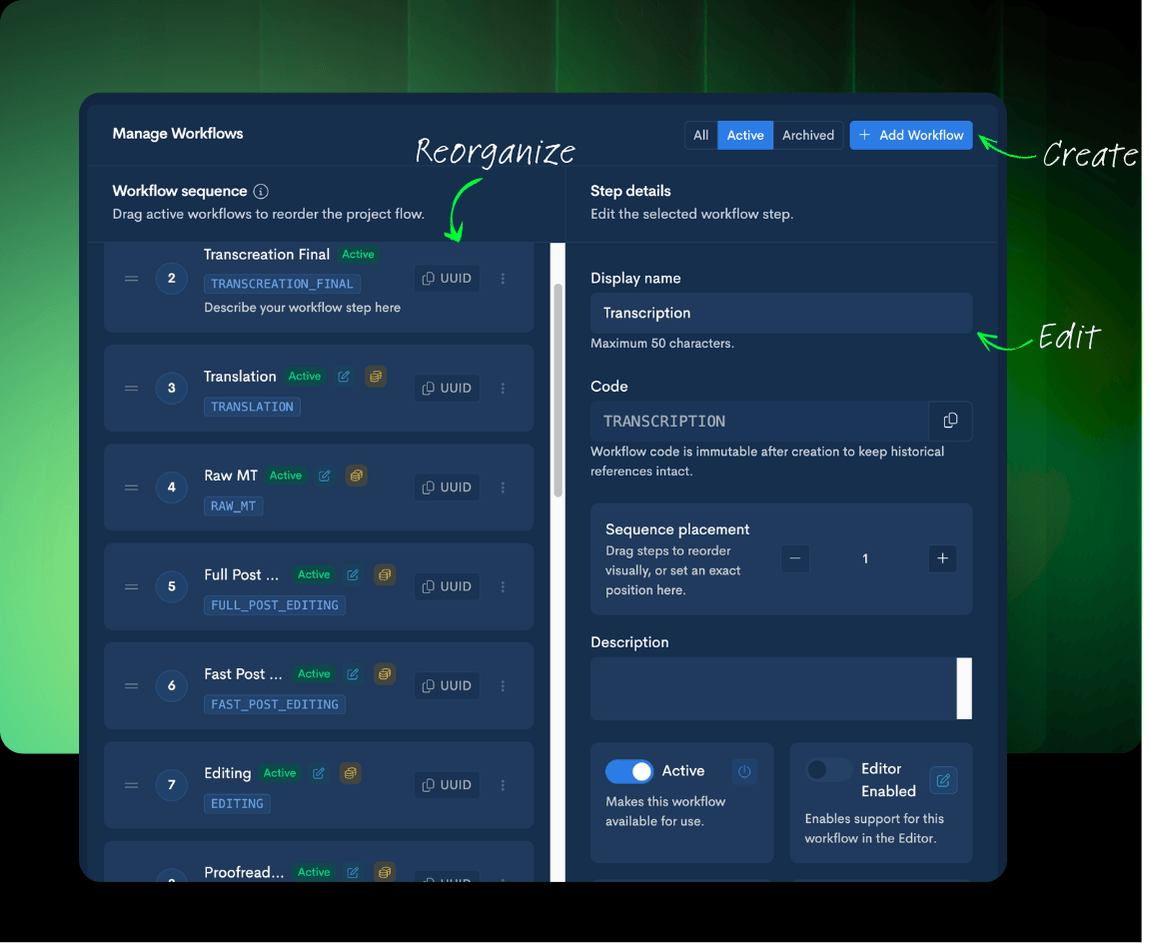
More output. More translations. Problem solved, right? Not quite. A few years ago, the challenge was producing more. Today, generating output is easier than ever.
The question is: how do you organize it all?
We spent some time improving our workflow management, making it easier to create, organize, reorder, archive, and manage workflow steps across your operation.
We also redesigned the Workflow Recommendations.
More output isn't the hard part anymore. Keeping quality consistent as volume grows is.
Translation Memory by Workflow
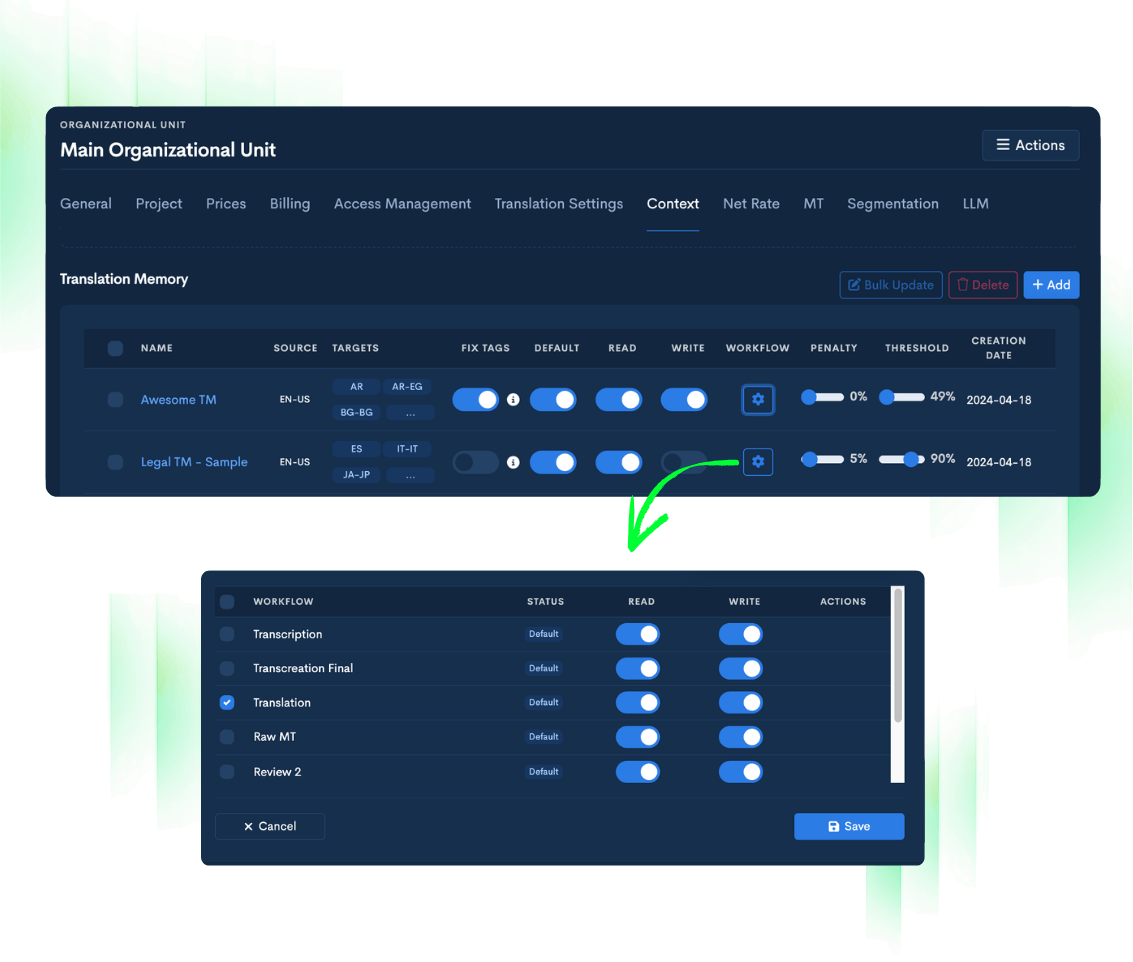
Translation Memories are a bit like good recipes. Not everyone should be changing them.
Now you can decide exactly which Translation Memories are available to each workflow, and whether that workflow should contribute new knowledge back, simply benefit from what's already there, or not use that TM at all.
This gives teams more flexibility over how knowledge moves through the process, while keeping the right memories connected to the right work.
Assignments Are Now Invitations
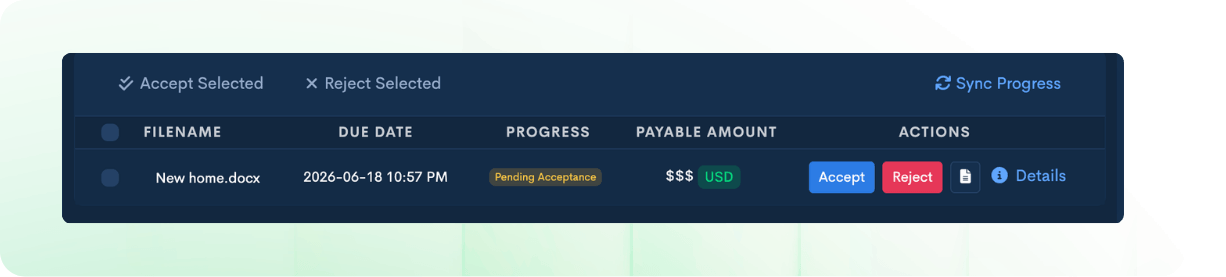
Not every assignment should be a commitment from the start. Sometimes people need to see the details before deciding if they can take the work.
That's why assignments can now be offered to linguists before being confirmed. Translators can review the task, understand the requirements, and decide whether to accept or decline the assignment before making the commitment.
A small change, but one that creates clearer expectations for everyone involved.
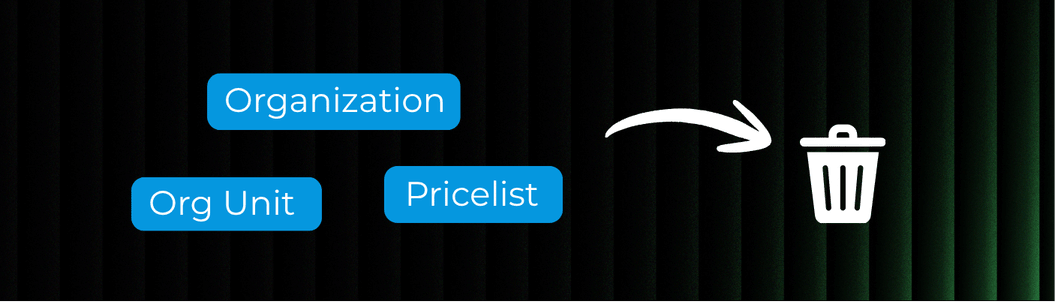
Delete Organizations, Org Units and Price Lists
Most platforms are just collections of records. A bit like a spreadsheet with no formulas. Delete a row and nothing else really cares.
wxrks works differently.
Organizations, Org Units, Price Lists, workflows, permissions, vendors, and projects are all connected. Which means deleting something is rarely as simple as pressing a button.
That's why we're happy to introduce that you can now delete Price Lists, Organizations, and Org Units without losing any of the intelligence behind the scene.
A small feature on the surface, but one that makes it much easier to keep your wxrks environment clean, organized, and evolving alongside your operation.
Other Updates
🌍 Account-Level Language Filtering
You can now limit which languages are available to users at the Account level.
🗂️ ZIP File Path Visibility
Files inside ZIP packages now display their full file path.
➡️ Editor Navigation Preferences
You can now continue navigating through confirmed segments instead of automatically jumping to the next unconfirmed one.
📖 Glossary-Based Term Suggestions
Glossary suggestions can now be triggered based on specific tags and conditions. Check out our documentation
🔐 Edit Source Permissions
New permissions give administrators more control over who can view and edit source content. View documentation.
⚡ API Updates
New API endpoints allow external systems to update task status and budget values.
What's New
A glimpse of the Future at LocWorld Dublin
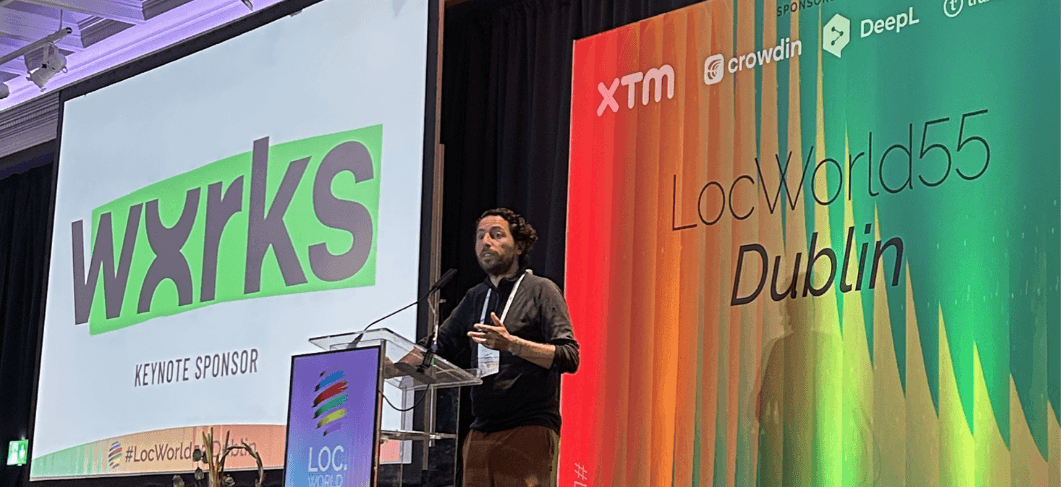
Every time Gabriel has the opportunity to open, he tends to move away from features, trends, and buzzwords and spend more time thinking about the longer-term shifts affecting our industry.
One of the ideas Gabriel shared was that the future belongs to the curious. In many ways, curiosity matters more today than it did a few years ago.
In the past, you could build a successful career simply by following the Localization Playbook. The process was known. The path was clear.
Today, the canvas is blank. You can automate. You can build. You can redesign workflows. You can create entirely new ways of working.
But what should you build?
What should you automate?
Which process should be reimagined?
Those questions don't have playbooks yet.
In a market full of uncertainty, and in an age of builders, those who remain curious and brave enough to experiment will continue to stand out.
Not because they have all the answers, but because they are willing to build, test, learn, and rebuild until they find them.
🏆 Third Place at PIC. A Different Vision for AI
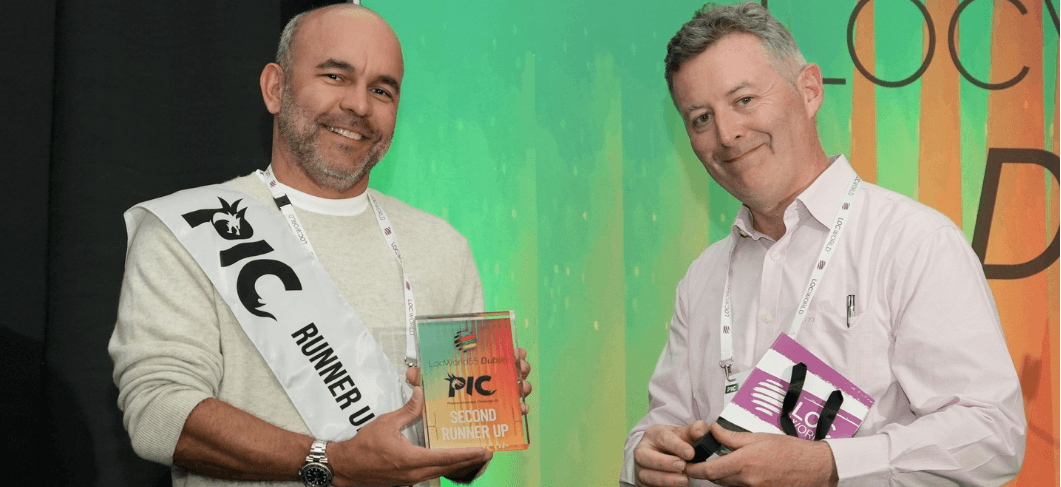
We were honored to receive 3rd place at PIC alongside our partners at Automation Anywhere.
But more important than the recognition was the message behind the project.
While much of the AI conversation focuses on replacing human work, this initiative explored a different path.
How AI can help people re-enter the workforce and develop new opportunities.
Together, we created a workflow that helped single mothers in Japan shift from translation production to technical validation. AI handled the drafting, while human experts focused on reviewing meaning, quality, and intent using wxrks technologies such as Context Sensitivity and Smells.
The result wasn't just greater productivity. It was new skills, new career opportunities, and a reminder that technology is at its best when it expands human potential.
Third place was an honor. Showing that AI can empower people instead of replacing them was even better.
How Elitza Became a Builder Inside Coca-Cola, Grew Usage by 671%, and Made Localization Relevant Again
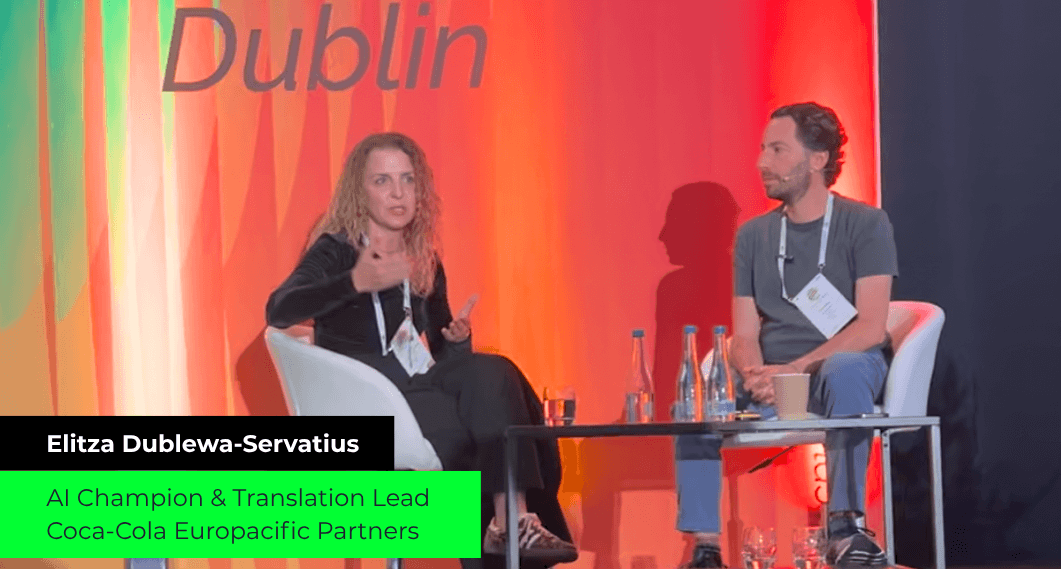
When AI disrupted the localization playbook, Elitza faced a choice: stay the course or explore a new path.
As AI spread throughout the organization, some executives began asking a difficult question: if everyone has access to Copilot, do we still need localization?
Instead of defending the old model, Elitza chose to build a new one.
The result?
30 million words translated
22,000+ requests created
671% more words translated than the previous solution
75% less administrative overhead
Watch the highlights from the conversation, or read the full story to see how a builder's mindset helped reshape localization at Coca-Cola.
Grateful to have you with us. Let’s move forward with purpose, together.
Let’s make it happen,
let’s make it wxrks!
Unlock the power of glocalization with our Translation Management System.
Unlock the power of
with our Translation Management System.


.png)
.png)
.png)
.png)
.png)
.png)
.png)