

When people talk about artificial intelligence, the conversation almost always starts in the same place: automation.
Those are valid questions. But perhaps they're not the most important ones.
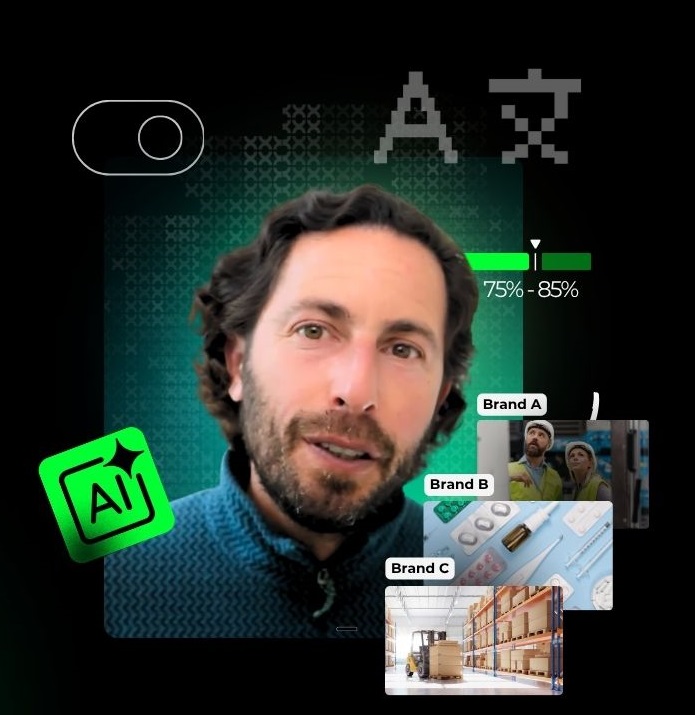
At LocWorld 55 in Dublin, Henrique Cabral, Partner and CTO at wxrks, offered a different perspective, one that shifts the conversation away from replacing people and toward empowering them.
Instead of asking, "How can AI do human work?", Henrique proposed a much more meaningful question: "How can AI help humans do more valuable work?"
That simple shift changes everything.
The AI debate has been focused on the wrong problem
Since the rise of generative AI, much of the industry has been fascinated by efficiency. Every week brings another announcement about AI replacing a task, automating a workflow, or reducing operational costs.
While these advances are real, they often create the impression that technology's highest purpose is removing humans from the equation. But localization has always been about much more than efficiency.
Language carries emotion, culture, context, and trust. It is one of the few business functions where technical accuracy alone is rarely enough.
A translation can be perfectly correct while still feeling unnatural, culturally inappropriate, or disconnected from a brand's identity. That is why the future of localization cannot simply be measured by how much work AI performs.
It should also be measured by how much more valuable human expertise becomes because of it.
Technology is only half of the innovation
One of the strongest messages from Henrique's presentation was that innovation is not just about building better technology. It's about designing technology with the right intention.
That distinction is often overlooked. Two companies can build similar AI capabilities and produce completely different outcomes depending on the problem they choose to solve.
One may use AI purely to reduce headcount. Another may use the exact same technology to create opportunities for people who previously had none.
The technology itself doesn't determine the impact. People do.
A real example of AI creating opportunity
To illustrate this philosophy, Henrique shared a partnership between wxrks and Automation Anywhere focused on an unexpected challenge.
In Japan, many highly educated and technically capable single mothers struggle to return to the workforce because of rigid corporate structures and long-standing social barriers.
The problem wasn't a lack of talent. It was a lack of opportunity.
Rather than asking how AI could replace translators, the project asked a completely different question: How can AI make these professionals employable again?
That led to a remarkable redesign of the localization workflow. Instead of expecting participants to translate everything manually, wxrks generated highly accurate Japanese drafts using its contextual AI capabilities.
The human experts then focused on something far more valuable: Technical validation.
Their role shifted from producing every sentence to evaluating meaning, identifying ambiguity, validating terminology, and ensuring linguistic precision. The repetitive work became automated. The expertise became even more important.
Human expertise didn't disappear. It became more valuable
This may be one of the biggest misconceptions surrounding AI. Many people assume automation inevitably reduces the importance of professionals.
In reality, well-designed AI often elevates them. By removing repetitive mechanical work, professionals can dedicate more attention to tasks that require judgment, experience, and critical thinking.
In localization, that includes:
- Evaluating semantic accuracy.
- Protecting brand voice.
- Resolving ambiguity.
- Identifying cultural risks.
- Making informed linguistic decisions.
These are not simply translation tasks. They are expert decisions. And expert decisions become increasingly valuable as AI handles more of the repetitive workload.

Learning systems create better collaboration
Another fascinating aspect of the project is that the AI wasn't static. Each correction made by the language experts became another opportunity for the system to improve.
Every adjustment helped recalibrate future suggestions, meaning the collaboration between human and machine became stronger over time. This creates a very different relationship with AI.
Instead of viewing it as a replacement, professionals become teachers, reviewers, and strategic decision-makers. The technology learns. The human guides. Both improve together.
That is a much healthier vision of artificial intelligence than simply measuring how many tasks can be automated.
Success wasn't measured only in productivity
The most inspiring part of Henrique's presentation wasn't actually the technology. It was the outcome. The program began with three single mothers participating in the initiative.
Within two years, one had secured full-time employment through the skills developed during the project, additional participants had joined, and the initiative continued to expand.
Those numbers matter. But they don't tell the whole story. The real success wasn't simply employment. It was dignity. These professionals weren't handed temporary work or charity.
They were given the opportunity to apply their expertise in a new technological environment, proving that AI can strengthen careers instead of eliminating them.
The future belongs to human. AI collaboration
As AI continues transforming industries, organizations face an important choice. They can design systems that optimize purely for efficiency. Or they can design systems that optimize for human potential.
The second path is undoubtedly more challenging. It requires thoughtful product design, careful workflow engineering, and a willingness to see technology as a collaborative tool rather than a replacement mechanism.
But it also creates something much more sustainable. Instead of constantly asking how to remove people from the process, companies begin asking how to make every professional more impactful.
That is a much more exciting future.
Rethinking what productivity really means
For decades, productivity has often been measured by one metric: How much more can one person produce?
Artificial intelligence invites us to consider a different metric altogether.
Perhaps productivity should also include:
- Better decisions.
- Higher-quality communication.
- More meaningful work.
- Greater accessibility.
- Broader participation in the workforce.
If technology enables experienced professionals to focus on higher-value activities while opening opportunities for people who were previously excluded, then its impact goes far beyond operational efficiency.
It becomes social innovation. And that may ultimately be AI's greatest contribution.
Building technology that serves people
Henrique Cabral's presentation at LocWorld 55 serves as a powerful reminder that artificial intelligence is not inherently transformative.
Its impact depends entirely on how we choose to use it. The future of localization, and perhaps the future of work itself, is unlikely to belong to organizations that simply automate the fastest.
It will belong to those that combine AI with human expertise in ways that create better communication, stronger businesses, and more opportunities for people.
Because the most valuable question is no longer whether AI can do the work. It's whether AI can help humans do work that matters even more.
Ready to build AI that empowers people?
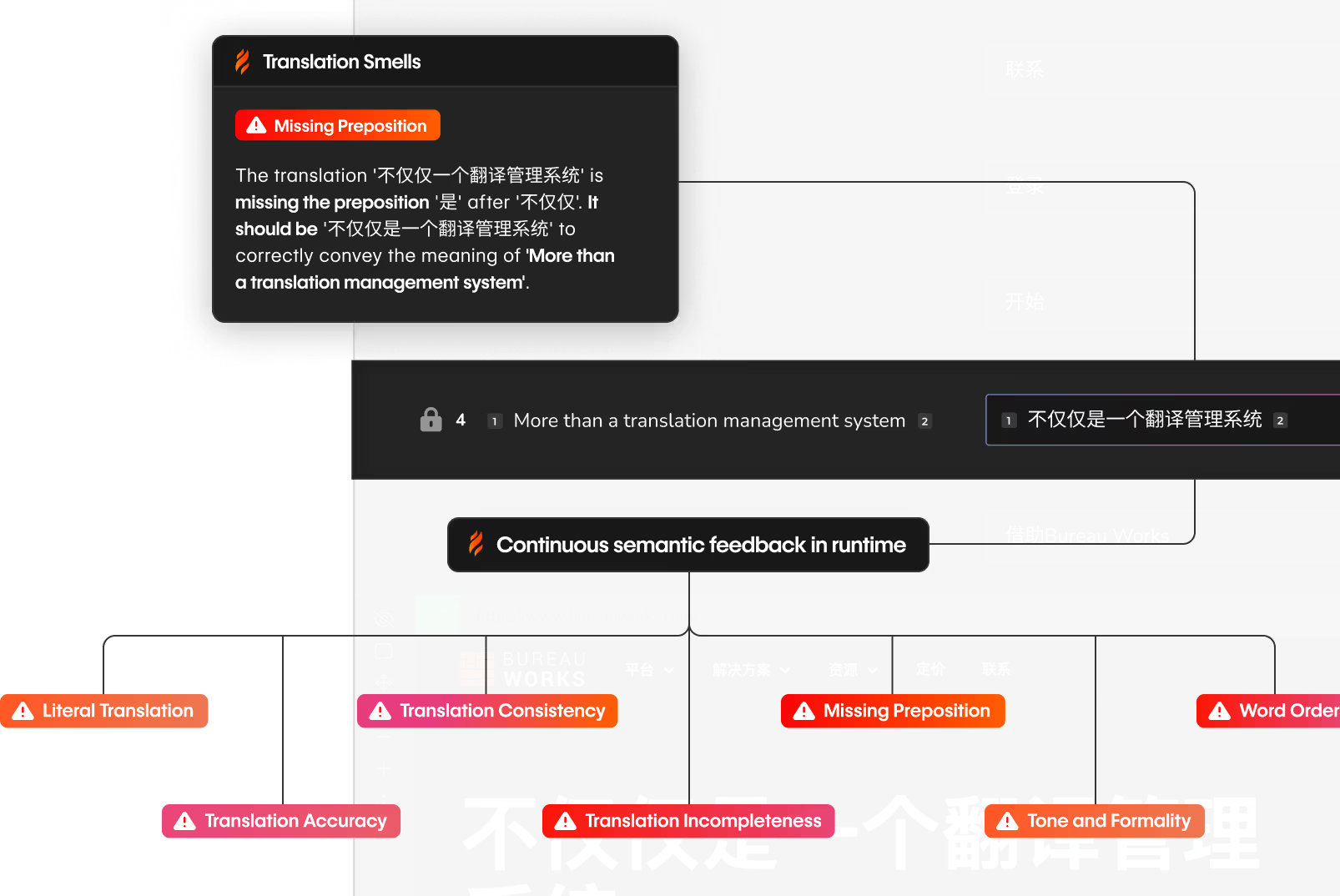
At wxrks, we believe AI should enhance human expertise, not replace it. Our translation management system combines contextual AI, semantic validation, and collaborative workflows to help localization teams work faster while keeping people at the center of every decision.
If you're ready to explore a more human-centered approach to AI-powered localization, sign up for wxrks and discover how technology can become a catalyst for better communication, and greater opportunity.
Unlock the power of glocalization with our Translation Management System.
Unlock the power of
with our Translation Management System.