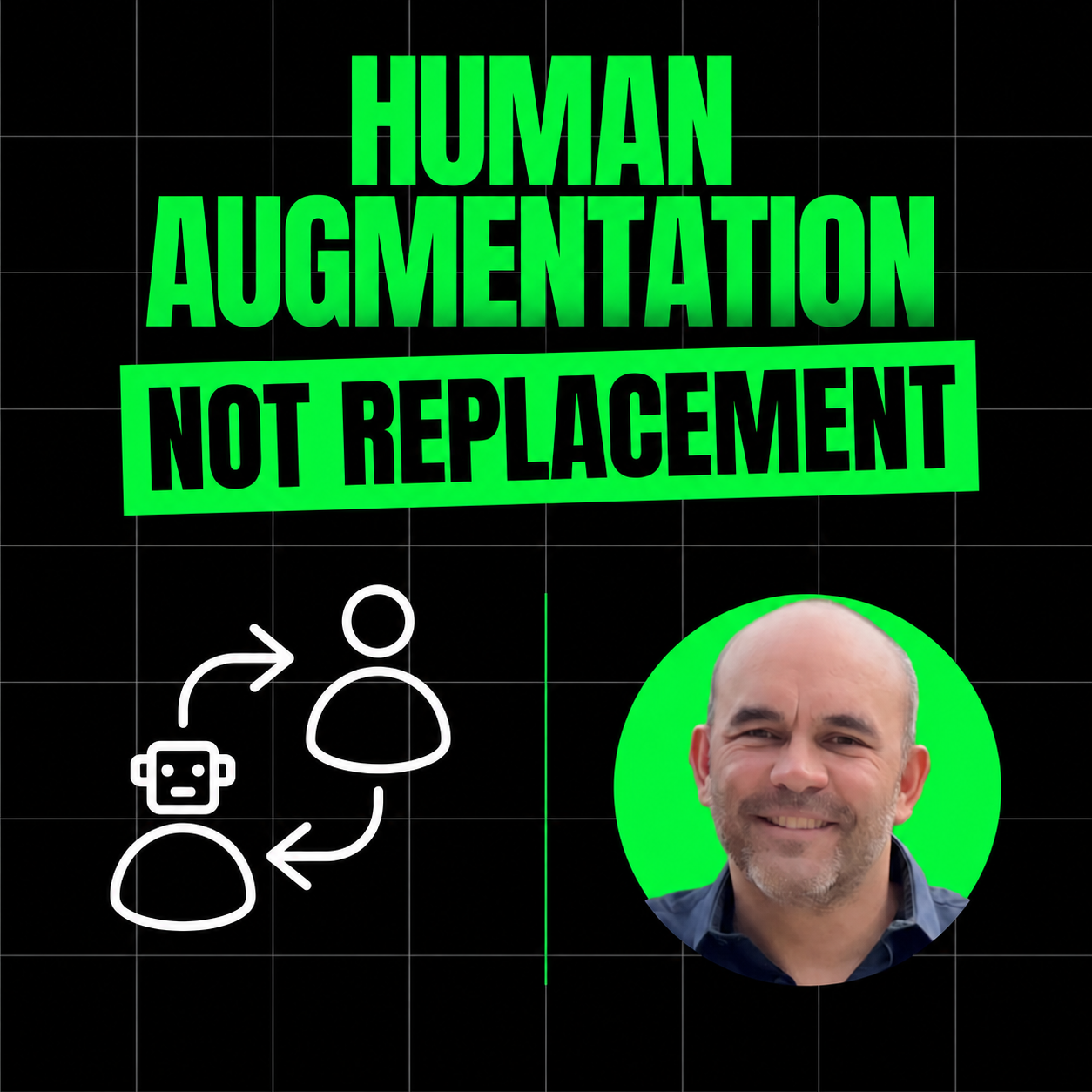


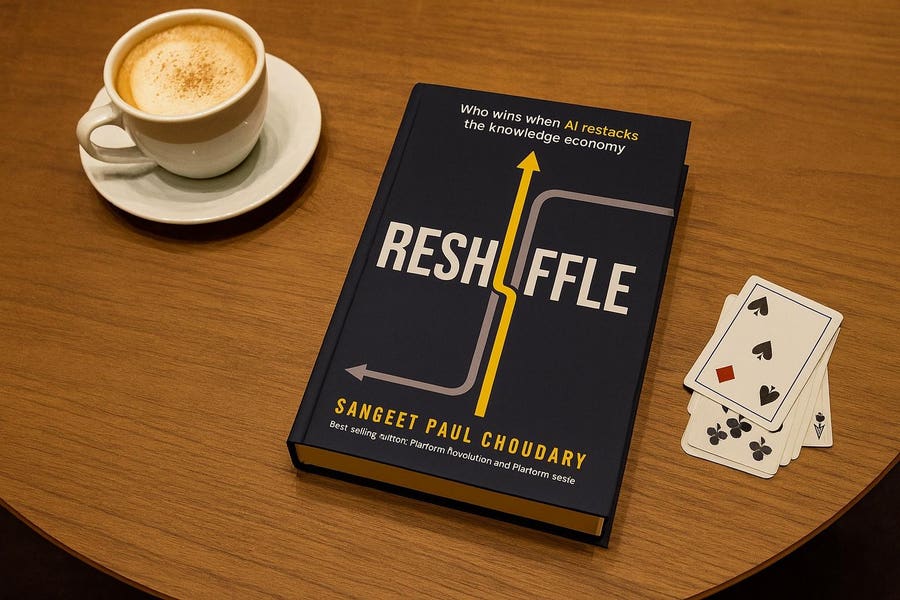
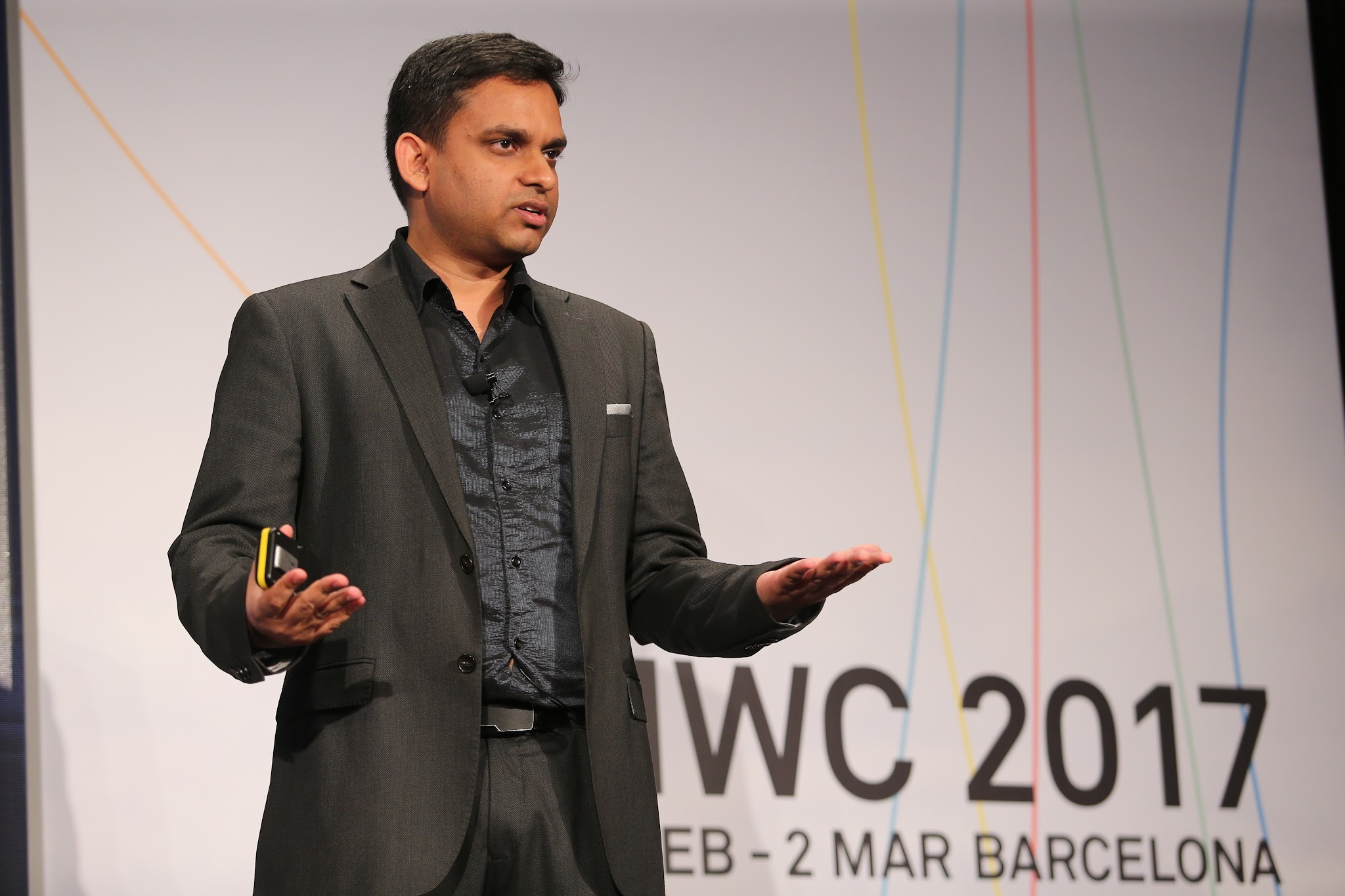
In a recent episode of Merging Minds, Gabriel Fairman talked to platform strategist and Reshuffle author Sangeet Paul Choudary to discuss one of the most important questions facing knowledge workers today:
What happens when AI can perform parts of your job better, faster, and cheaper than ever before?
For the translation industry, this question is no longer theoretical.
Machine translation already transformed workflows once. Generative AI is accelerating that transformation. Yet according to Choudary, the biggest mistake organizations are making is assuming that AI is simply another automation tool. It isn't.
The real change is much deeper: AI is reshaping how value is created, distributed, and delivered across entire industries.
The Translation Industry Is Facing a Coordination Problem, Not an Automation Problem
For years, localization teams approached technology through the lens of productivity. New tools made translation faster. Translation memories reduced repetitive work. Machine translation lowered costs and increased throughput.
The underlying workflow remained intact. The assumption was simple: improve the existing process and everyone benefits. But AI introduces a fundamentally different challenge.
As Choudary explains during the episode, previous waves of automation worked best on clearly defined, codified processes. Knowledge work is different. Much of the value exists in judgment, interpretation, context, and decision-making rather than a sequence of repeatable steps.
That distinction matters. Instead of simply automating tasks, AI is beginning to reorganize how work itself is structured. The question is no longer: "How can we make translation faster?"
The question becomes: "What parts of translation create value, and who should perform them?"
The Dangerous Assumption About Language Models
It's easy to understand why many people assume translation is one of the first professions AI will replace. After all, large language models are built around language. If AI can generate fluent text in dozens of languages, what role remains for professional translators?
According to Choudary, this perspective misunderstands what translation actually delivers. Translation is not merely the transfer of language. It is also the transfer of:
- Context
- Nuance
- Intent
- Cultural understanding
- Consequences
The last point is especially important. A mistranslated marketing slogan might damage brand perception. A mistranslated legal document can create enormous liability. A mistranslated healthcare instruction can have life-changing consequences. The words themselves are only part of the equation.
The real value often lies in understanding what happens when those words are interpreted by a specific audience in a specific context.
Why Human-in-the-Loop Is Not Enough
One of the most interesting observations from the discussion concerns the industry's growing reliance on "human-in-the-loop" workflows. Many organizations view this as the ideal compromise:
- AI generates the translation.
- A human reviews the output.
- Quality is preserved.
On the surface, this seems reasonable. But Choudary argues that it may actually be a trap. When translators spend most of their time correcting machine outputs, the nature of the profession changes. The role shifts from creating value to validating value.
From solving language problems to fixing machine mistakes. From applying expertise to monitoring automation. The human remains in the process, but the work itself may become less meaningful, less differentiated, and ultimately less valuable.
This is why simply inserting AI into an existing workflow often fails to unlock meaningful transformation. The workflow survives. The profession stagnates.
The Real Opportunity: Rebundle Your Expertise
Perhaps the most powerful idea from the episode is Choudary's concept of "rebundling." Every professional role contains multiple forms of value. For translators, those might include:
- Domain expertise
- Cultural adaptation
- Client consultation
- Terminology management
- Risk assessment
- Brand voice protection
- Audience understanding
AI may absorb portions of this value stack. But it rarely absorbs all of it. The challenge is identifying which elements remain uniquely human and reorganizing them into a new service model.
In other words, the future does not belong to translators who simply translate. It belongs to professionals who understand the broader problem their clients are trying to solve.
Stop Protecting the Workflow
This may be the most uncomfortable lesson from the conversation. Many professionals instinctively defend the workflow they have spent years mastering. That reaction is understandable.
Workflows provide:
- Identity
- Expertise
- Status
- Predictability
But protecting the workflow can become a distraction. Clients do not purchase workflows. They purchase outcomes. As Choudary notes, every knowledge worker should return to first principles and ask: What problem am I solving?
Then ask a second question: Can I solve that problem more effectively using the new capabilities now available?
That shift changes everything. Instead of competing with AI, professionals begin collaborating with it. Instead of defending old processes, they design better solutions.
Self-Awareness Becomes a Competitive Advantage
Historically, careers were built around becoming better at a stable job. The rules were relatively clear. Learn the profession. Develop expertise. Gain experience. Advance.
AI introduces a different reality. The job itself may evolve faster than traditional career paths can adapt. This makes self-awareness far more important.
The professionals who thrive will be those who understand:
- What unique strengths they possess
- Which skills are becoming commoditized
- Which capabilities remain difficult to automate
- How those capabilities can create new value
That requires a level of reflection many industries have never needed before. But it may become one of the defining professional skills of the AI era.
Translation as a Preview of the Future
One reason the localization industry is so fascinating right now is that it offers an early glimpse into changes that will affect nearly every knowledge profession.
Law. Marketing. Consulting. Design. Finance. Software development. All of them face similar questions. How much of the workflow can AI absorb? What remains uniquely human? How should value be redistributed when the traditional process no longer defines the profession?
The translation industry happens to be confronting these questions earlier than most. That makes it less of an exception and more of a preview.
Conclusion
The conversation between Gabriel Fairman and Sangeet Paul Choudary highlights an important reality: The future of translation is not a battle between humans and AI. It is a challenge to rethink where value comes from.
Organizations that treat AI as a simple productivity tool may gain short-term efficiency. Organizations that rethink workflows, roles, and customer outcomes may redefine the industry.
For translators, localization teams, and language service providers, the goal should not be protecting yesterday's process. It should be building tomorrow's solution.
Ready to build localization workflows designed for the AI era?
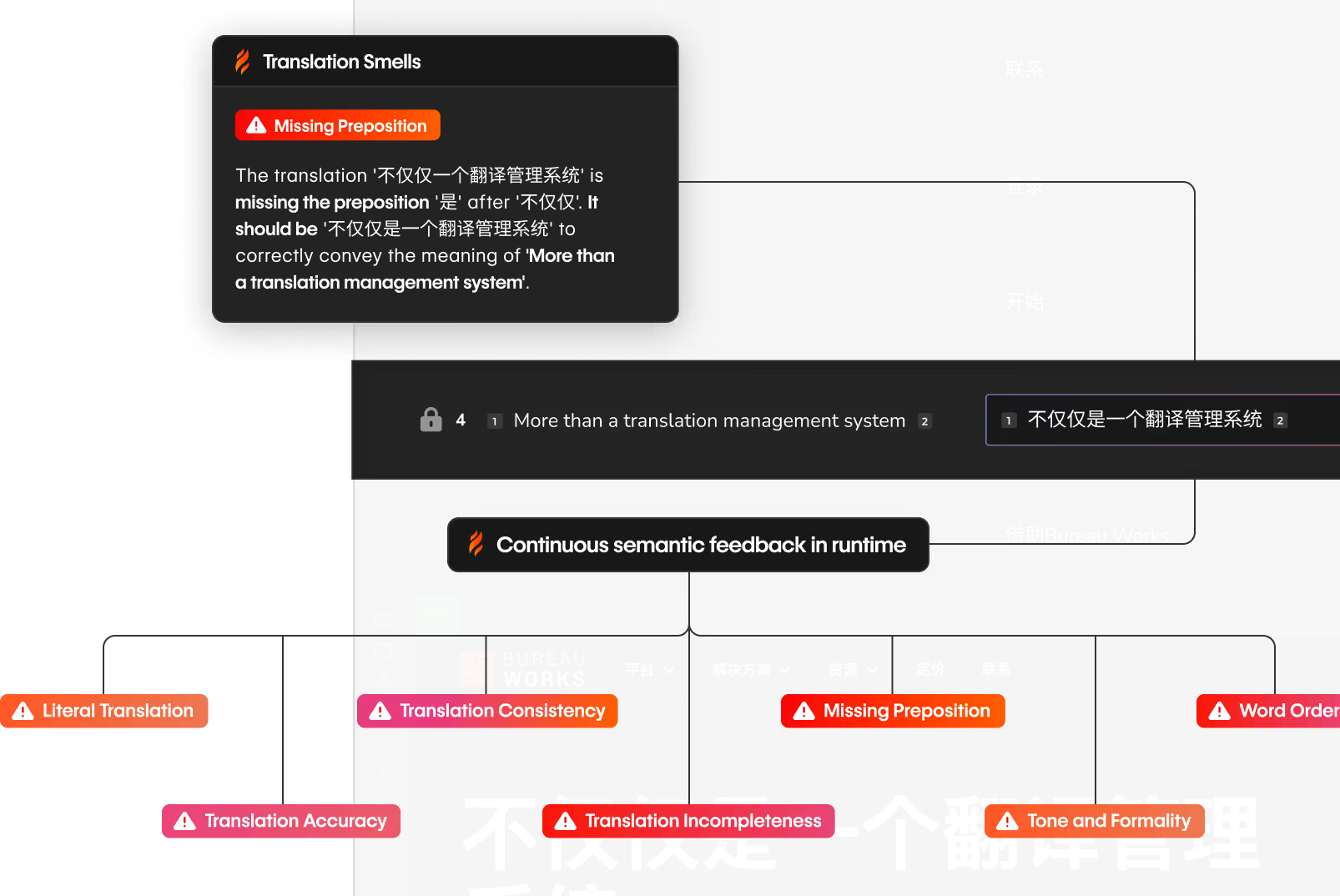
wxrks is a translation management system built to help organizations orchestrate human expertise, AI-powered workflows, terminology management, and localization operations at scale. Instead of forcing teams to choose between automation and quality, wxrks helps them combine both into a modern localization strategy.
Unlock the power of glocalization with our Translation Management System.
Unlock the power of
with our Translation Management System.