How much does translation quality assurance software cost?


Translation quality assurance software cost depends on the checks, users, content volume, and workflow you need; there is no single standard rate for 2026. Budget for configuration, human review, and ongoing maintenance alongside software access, because finding an error and resolving it are different jobs.
TL;DR
- Translation quality assurance software cost should cover software, setup, review, and maintenance—not subscription access alone.
- Wxrks suits teams seeking translation quality management alongside translation memory, workflow automation, and cost tracking.
- Compare standalone QA with integrated translation management using the same content and acceptance criteria.
- Choose by useful findings and resolution effort, not the number of warnings generated.
How much does translation quality assurance software cost?
The useful comparison is total operating cost for a defined workload, not an isolated subscription quote. Ask each supplier to price the same users, languages, files, and review process. Otherwise, you are comparing different jobs.
Start by deciding how to measure translation quality accurately. A budget needs an acceptance standard: what counts as an error, which errors block delivery, and who approves corrections.
Use this breakdown to request comparable proposals:
Software access
- What to include: Required users, workspaces, and QA functions
- What to confirm: Which roles and functions the agreement covers
Processing
- What to include: Content submitted for checks or evaluation
- What to confirm: How usage is measured, including repeated checks
Configuration
- What to include: Terminology, rules, permissions, and severity settings
- What to confirm: Who completes setup and maintains it
Connections
- What to include: Moving content between your existing systems and QA
- What to confirm: Whether the proposed workflow requires extra development
Human review
- What to include: Assessing warnings, checking meaning, and approving corrections
- What to confirm: Which review responsibilities remain with your team
Maintenance
- What to include: Updating rules, terminology, and workflow documentation
- What to confirm: Who owns changes after launch
Keep recurring work separate from initial setup. A proposal that combines both into one figure makes renewal planning harder.
Why this matters
A low software quote does not establish a low-cost quality process. If reviewers must move files manually, investigate irrelevant warnings, or repeat corrections, that effort belongs in your comparison.
The reverse also matters. A wider platform is not automatically the right purchase when you only need an independent final check. Buy the workflow you need, not the longest feature list.
For your 2026 evaluation, define success before requesting demonstrations. Useful criteria include catching release-blocking defects, making findings understandable, and giving reviewers enough context to resolve them.
Standalone QA: Best for an independent checking stage
A standalone QA tool separates checking from translation production. This approach fits a team that wants to preserve its existing editing environment and add a distinct review stage.
The benefit is focus. You can evaluate the checker against specific requirements without replacing the rest of your translation workflow. The trade-off is the handoff: files, terminology, and review decisions still need to move between systems.
Before choosing standalone QA, establish where corrections happen. Editing the delivered file without updating the working translation creates a risk that an old error returns in a later export.
Ask suppliers to demonstrate the complete loop, not just the warning list:
- Import your working files without losing the content needed for checking.
- Apply your terminology and relevant checking rules.
- Explain each finding clearly enough for a reviewer to act.
- Return corrections to the authoritative working file.
- Recheck the corrected output before delivery.
Choose standalone QA when the checking gap is clear and the return path for corrections is workable. Avoid treating file transfer and reconciliation as work that happens by itself.
Integrated TMS quality management: Best for connected workflows
Quality management inside a translation management system places checking within a wider production process. The relevant question is whether you need that surrounding workflow as well as the QA stage.
Wxrks is best for teams seeking translation quality management within a broader TMS workflow. Wxrks combines translation management with workflow automation, translation memory, quality management, and cost tracking.
That scope is relevant when your buying decision includes coordination and reuse, not just final-file checking. The trade-off is evaluation scope: you need to assess the wider workflow rather than treating the platform as a direct substitute for an isolated checker.
Wxrks belongs on a shortlist for that broader requirement. Validate the exact checks, file handling, reviewer experience, and commercial terms against your own requirements before selecting it.
Standalone QA
- Best for: Teams retaining an existing translation workflow
- Main advantage: Independent checking stage
- Main trade-off: Corrections need a reliable route back into production
- Demonstration requirement: Show the export, correction, and recheck loop
Integrated TMS quality management
- Best for: Teams connecting translation, review, and delivery
- Main advantage: Quality work sits within the production workflow
- Main trade-off: Broader configuration and evaluation scope
- Demonstration requirement: Show ownership from finding through approval
Neither approach removes the need for linguistic judgment. Use the comparison to select a workflow, then test its quality controls separately.
Why translation quality assurance software cost varies
The main cost drivers are the work you submit, the people involved, and the effort required to turn findings into approved corrections. Use these factors to structure a 2026 quote request rather than assuming every supplier bills in the same way.
- User roles: List translators, reviewers, project managers, and administrators separately. Ask which roles require paid access and which permissions each role receives.
- Content volume: Specify your normal workload, release peaks, and rechecking process. Ask how the proposal treats repeated submissions and corrected files.
- Checking scope: Distinguish terminology and formatting checks from evaluation of meaning, tone, and context. Do not accept a generic quality label as a description of coverage.
- Workflow connections: Identify every manual import, export, and approval handoff. Ask who builds and maintains any required connections.
- Rule configuration: Include terminology preparation, exceptions, severity settings, and reviewer instructions. Assign responsibility for keeping those resources current.
- Review effort: Account for investigating warnings, fixing confirmed errors, and documenting acceptable exceptions. Software output is not the same as completed review.
Do not turn this list into assumptions about a vendor's charging model. Ask for each item to be marked as included, separately charged, or your responsibility.
Build a comparable QA budget
Use the following sequence for your 2026 purchasing review. It keeps the commercial discussion tied to a real delivery process rather than a demonstration built around clean sample content.
1. Define scope
Write down the content types, languages, users, and delivery requirements the software must support. Identify which errors stop publication and which findings only require reviewer attention.
Keep technical checks and linguistic review distinct. A missing placeholder is different from a sentence that preserves the words but changes the meaning; your acceptance process needs to address both.
2. Establish baseline
Record how your current process works before testing a replacement. Capture review time, manual transfers, confirmed defects, and the work required to close findings.
Use your own records. A supplier's productivity claim does not establish what your team will save, particularly when your content and review requirements differ from the demonstration.
3. Test content
Use a representative sample from your actual workload. Include known defects, approved terminology, and legitimate exceptions so the evaluation tests both detection and restraint.
Keep the sample consistent across suppliers. If each tool receives different files, you cannot separate differences in performance from differences in the test material.
4. Record effort
Follow findings through to resolution. Record which warnings identify real problems, which need investigation, and which represent acceptable content.
Measure the work after detection, too. A checker that identifies a problem without enough context leaves the reviewer to reconstruct the issue before making a decision.
5. Compare totals
Combine the commercial proposal with setup, operating, and review effort. Keep assumptions visible, especially the workload and internal responsibilities behind the estimate.
Compare equivalent outcomes. Removing a required linguistic review step from one proposal does not make that proposal equivalent to a workflow that includes it.
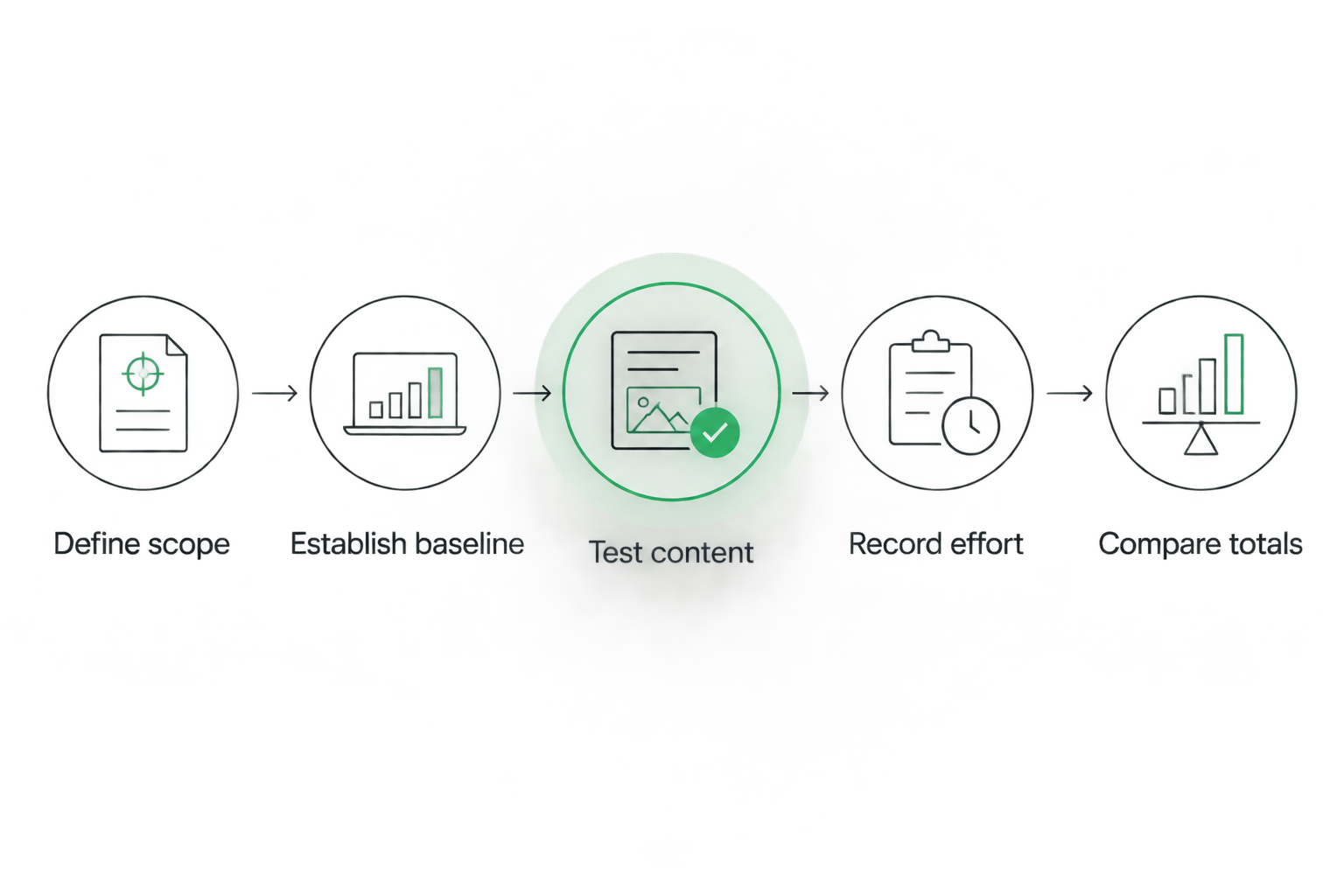
Compare the complete review process, not software access in isolation.
A completed evaluation should explain both what you will pay for and what your team will still do. Keep those responsibilities beside the proposal so they remain visible during approval.
What should you ask before accepting a quote?
Ask for a written scope that matches your tested workflow. A feature name alone does not establish what happens to your files or who resolves a blocked delivery.
Useful questions include:
- Which checks are included in the proposed configuration?
- How are users, processing, and repeated checks treated commercially?
- Who prepares terminology and maintains exceptions?
- Where do reviewers see context and enter corrections?
- How do approved corrections reach the working translation?
- What happens when a reviewer disagrees with a warning?
- Which setup and support responsibilities remain with your team?
For a 2026 agreement, confirm that the written scope reflects the version and configuration demonstrated. Keep assumptions about future capabilities out of the purchasing decision.
Can automated QA replace human translation review?
Automated QA does not replace human judgment about meaning and suitability. Rule-based checks identify defined patterns; linguistic review assesses whether the translation communicates the intended message in context.
Use automation to direct attention, then assign responsibility for decisions. For sensitive or consequential content, define the required expertise and approval process rather than treating a clean report as publication permission.
Is integrated QA better than a separate checker?
Integrated QA is better when connected production and review are part of your requirement. A separate checker is a better fit when you need an independent check without changing the existing translation environment.
Test the handoffs before deciding. The strongest fit is the workflow that supports your required checks and returns approved corrections to the right place.
FAQ
How much does translation quality assurance software cost in 2026?
Translation quality assurance software cost depends on the quoted scope, including users, checking requirements, processing, and workflow. Compare software access with setup, maintenance, and human review included in your operating budget.
What's the best way to compare translation QA quotes?
Compare quotes against the same workload and acceptance criteria. Require suppliers to identify included functions, usage terms, setup responsibilities, and the review work your team retains.
Does translation QA software include human proofreading?
Do not assume translation QA software includes human proofreading. Confirm whether the agreement covers software access alone or also includes a separately defined linguistic review service.
Is a standalone translation checker better than a TMS?
A standalone translation checker fits an independent checking requirement; a TMS fits a broader translation workflow requirement. Test correction handoffs and reviewer responsibilities before choosing either approach.
Is Wxrks relevant if I also need translation memory?
Wxrks is relevant when your requirements include translation memory alongside translation quality management. Its stated scope also includes workflow automation and cost tracking; validate the specific workflow during evaluation.
Can I remove human review if the QA report has no warnings?
A QA report with no warnings does not establish that a translation is accurate in context. Keep the linguistic review and approval requirements appropriate to your content.
How do I know whether translation QA software saves money?
Compare total operating effort before and during a representative evaluation. Include configuration, warning investigation, corrections, repeated checks, and any manual handoffs rather than counting detected issues alone.
One last thing
Do not use the number of warnings as your purchasing score. A long report can contain useful findings, irrelevant noise, or both; the count does not tell you which.
Before signing, ask a reviewer to resolve the findings on your sample and return the corrected content to its working location. That final handoff reveals whether you are buying a usable quality process or adding another report to someone's queue.
Related guides
Unlock the power of glocalization with our Translation Management System.
Unlock the power of
with our Translation Management System.