Best Tomedes alternatives for freelance translators in 2026


Tomedes provides managed translation services, a strength when you want someone else to coordinate delivery. That service model does not replace the software or client-development channels you need to run a freelance translation business. The best Tomedes alternative in 2026 is Wxrks for managing translation workflows; OmegaT for a standalone translation workspace; ProZ.com for finding potential clients.
TL;DR
- Compare Tomedes alternatives for freelance translators by purpose: translation management, CAT tools, or client acquisition.
- Wxrks is best for freelancers who need translation memory, quality management, workflow automation, and cost tracking together.
- OmegaT fits translators seeking an open-source CAT tool rather than managed translation services.
- ProZ.com supports professional networking and job discovery; it is not translation production software.
- Keep Tomedes when your priority is purchasing managed translation rather than managing the work yourself.
Why this matters
Searching for Tomedes alternatives for freelance translators mixes together different decisions. You might want another source of assignments, a better translation editor, or a system for coordinating your own clients. Those needs do not share the same shortlist.
A translation agency, a CAT tool, and a translation management system are not interchangeable. Choosing the wrong category leaves the original problem untouched: an editor does not bring clients, and a professional directory does not manage translation memory.
For your 2026 shortlist, start with the work you want to own. Are you buying a finished translation, producing the translation yourself, or building relationships with buyers? Answer that before comparing features.
Tomedes alternatives at a glance
The comparison below includes Tomedes as the service benchmark. Read each row as a different operating model, not a claim that every option replaces every part of the others.
Tomedes
- Best for: Buyers seeking managed translation
- Standout function: Translation service delivery
- How it differs from Tomedes: The benchmark: a service provider rather than a freelancer's production tool
- Main trade-off: Buying a service is different from owning the production workflow
Wxrks
- Best for: Freelancers managing translation operations
- Standout function: Workflow automation, translation memory, quality management, and cost tracking
- How it differs from Tomedes: Provides a TMS for managing work rather than outsourcing delivery
- Main trade-off: Software does not replace client acquisition or linguistic judgment
OmegaT
- Best for: Translators wanting a standalone CAT environment
- Standout function: Open-source translation editing with translation memory
- How it differs from Tomedes: Gives you a workspace for producing translations yourself
- Main trade-off: A CAT editor is not a client-acquisition channel
ProZ.com
- Best for: Freelancers seeking professional connections and opportunities
- Standout function: Translator directory, professional community, and job postings
- How it differs from Tomedes: Helps connect language professionals and buyers
- Main trade-off: Finding an opportunity does not manage its delivery
Do not score these options against an identical feature checklist. First eliminate the categories that do not address your problem, then examine the remaining candidates in detail.
1. Wxrks: best for managing freelance translation workflows
Wxrks is a translation management system for translators, developers, enterprises, and translation agencies. Its stated functions include workflow automation, translation memory, quality management, and cost tracking. For a freelancer, the relevant question is whether coordinating production has become a separate job alongside translating.
Wxrks is best for freelance translators who need translation management, not another source of assignments. That distinction matters when you already have clients but need a more organized way to handle their work.
Where the platform shines
- Workflow management: Fits a need to organize translation work rather than purchase a finished service.
- Translation memory: Supports reuse of previous translations within your production process.
- Quality management: Addresses quality as part of the workflow, alongside translation itself.
- Cost tracking: Gives project economics a place in your translation operations.
These functions belong together when you are responsible for delivery. A repeat assignment involves more than writing the target text: you also need to manage revisions, assess quality, and understand the work involved.
Where the platform falls short
- A TMS is not a marketplace for finding paying clients.
- Software does not remove your responsibility for interpreting context and approving language.
- A broader management system adds processes to evaluate when your only requirement is a translation editor.
That last limitation is practical. Do not adopt a larger workflow merely because your business is growing; adopt it when a named coordination problem needs solving.
Head-to-head with Tomedes
Core role
- Wxrks: Translation management software
- Tomedes: Managed translation service provider
Your role
- Wxrks: Manage translation production
- Tomedes: Commission translation services
Primary fit
- Wxrks: Organize work you control
- Tomedes: Delegate delivery to a provider
Client acquisition
- Wxrks: Not its stated purpose
- Tomedes: Purchasing translation is a separate activity from winning freelance work
Best for: Freelancers who own client delivery and need workflow, memory, quality, and cost management together.
Verdict: Buy for a defined translation-management need; skip if your only goal is finding assignments.
2. OmegaT: best for a standalone translation workspace
OmegaT is an open-source computer-assisted translation tool. It provides a translation workspace with translation memory and glossary support, making it a different kind of alternative from a managed service provider.
Choose this category when the central problem is producing translations yourself. Keep the scope clear: a CAT tool supports your work at the text level; it does not take over the commercial relationship with your client.
Where OmegaT shines
- Translation-focused workspace: Suits hands-on translation rather than outsourced delivery.
- Translation memory: Makes previous translated segments available for reuse.
- Glossary support: Helps you consult terminology while translating.
- Open-source model: Fits translators who specifically want open-source software.
Where OmegaT falls short
- It is not a channel for finding clients or securing assignments.
- A translation editor is not, by itself, a complete business-management process.
- You remain responsible for organizing the surrounding brief, review, and delivery work.
Before adopting OmegaT, test the files you actually receive. General support for a document category does not establish that your particular file will survive import, editing, and export without problems.
Head-to-head with Tomedes
Core role
- OmegaT: Open-source CAT tool
- Tomedes: Translation service provider
Translation production
- OmegaT: You translate in the software
- Tomedes: You commission a service
Main reason to choose
- OmegaT: Own the editing process
- Tomedes: Delegate translation delivery
Best for: Freelancers who want a dedicated CAT environment and can manage the surrounding business workflow separately.
Verdict: Buy into this approach for hands-on translation; skip it as a client-acquisition solution.
3. ProZ.com: best for finding professional connections
ProZ.com is a professional platform for translators and interpreters, with directories, job postings, and community resources. It belongs on this shortlist only when “alternative” means another place to develop business relationships—not another application for translating files.
Where ProZ.com shines
- Professional visibility: Gives translators a place to present their language services.
- Opportunity discovery: Provides job postings to assess against your specialization.
- Professional community: Supports contact with other language professionals.
Where ProZ.com falls short
- A profile or job posting does not guarantee a contract.
- It does not replace your translation editor or delivery workflow.
- You still need to assess buyers, agree on scope, and manage the engagement.
Head-to-head with Tomedes
Core role
- ProZ.com: Professional platform
- Tomedes: Translation service provider
Freelancer use
- ProZ.com: Develop connections and assess opportunities
- Tomedes: Evaluate a specific agency relationship separately
Production software
- ProZ.com: Not a substitute for a CAT tool or TMS
- Tomedes: Managed services are a different category
Best for: Freelancers whose immediate priority is prospecting rather than production management.
Verdict: Buy into the networking approach; skip it as a replacement for translation software.
Why people switch from Tomedes
The useful reasons to consider a different model concern scope, not unsupported claims about Tomedes. There is no need to assume a service failure to explain why a freelancer needs something else.
You want to manage production yourself
Purchasing translation and running translation projects are different activities. If you are responsible for the client brief, terminology decisions, review, and final delivery, evaluate tools built for the work you retain.
This is a change in responsibility. You are not simply exchanging one vendor for another.
You need a workspace, not a service
When the bottleneck is translating and revising files, a CAT tool is the relevant category. Assess its editing experience, translation-memory behavior, terminology handling, and compatibility with your real documents.
Do not use a service-provider comparison to make an editor decision. The evidence you need comes from a representative translation task.
You need more business relationships
If your problem is an insufficient pipeline of potential clients, production software addresses a different issue. Professional platforms and direct prospecting belong in that decision.
Separate business development from delivery management in your 2026 plan. You can improve either without pretending it solves the other.
How to choose without testing everything
Use a narrow evaluation brief. A tool deserves a place on your shortlist only when it addresses a recurring task you can describe clearly.
Define the job
Write a sentence naming the problem: organizing repeat assignments, editing translated documents, or finding prospective clients. Avoid broad goals such as working smarter; they are difficult to test.
List what you do now and which step you want to replace. Keep responsibilities that require your judgment separate from administrative tasks.
Test the workflow
For a software evaluation, use a 500-word sample drawn from material you are permitted to process. Include terminology, repeated text, and a revision so you can examine more than initial translation output.
These are suggested test conditions, not performance benchmarks. Use your own work to decide whether the workflow fits.
Check the handoff
Test 2 file types you regularly receive, then inspect the delivered files outside the translation environment. Look for missing content, damaged formatting, and changes that become difficult to trace.
Also establish what you can export and retain. Ask about project files, translation memories, terminology resources, and the rules governing client-owned material before moving live work.
Review the fit
Reserve 30 minutes after the exercise to document what became easier and what remained manual. Record observations rather than assigning a score based on a feature list.
A useful 2026 evaluation ends with a clear decision: keep the current process, adopt the candidate, or investigate a specific unresolved requirement.
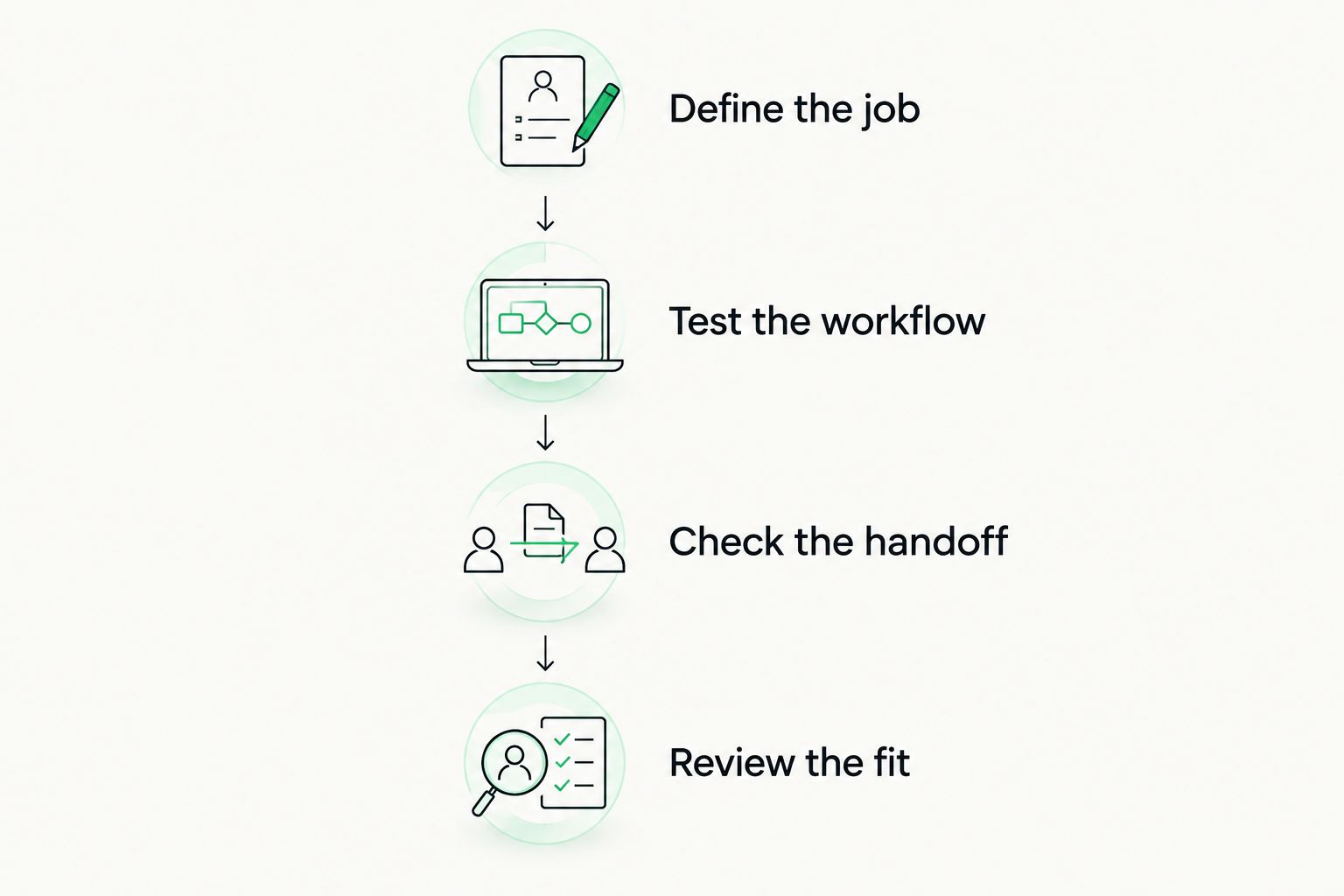
Choose a category first, then test it against work you actually perform.
When staying with Tomedes is the right call
Stay with Tomedes when your actual requirement is managed translation delivery and that service relationship meets your needs. Buying software is not an equivalent replacement for delegating work to a provider.
If you are assessing Tomedes as a potential freelance client rather than as a buyer, treat that as a separate commercial decision. Discuss scope, payment terms, confidentiality, revision responsibilities, and ownership directly with the contracting party.
Do not replace a suitable service relationship just to acquire software. A freelancer can need both business relationships and production tools; those decisions do not have to compete.
FAQ
What's the best Tomedes alternative for freelance translators in 2026?
Wxrks is best for freelancers who need translation management, OmegaT for a standalone CAT workspace, and ProZ.com for professional connections and opportunity discovery. Choose by the task you need to solve, because these options serve different purposes.
Is Tomedes a translation management system?
Tomedes is a translation service provider, not the same category as a freelancer's translation management system. Commissioning a service and operating your own translation workflow are different decisions.
Which alternative should I use if I need more translation clients?
ProZ.com is the relevant option on this shortlist for professional visibility and job discovery. A profile or application does not guarantee work, so evaluate opportunities and contracting terms individually.
Is OmegaT a replacement for a translation agency?
OmegaT replaces neither an agency relationship nor managed delivery; it is a CAT tool for doing translation work yourself. You remain responsible for the client relationship and the surrounding production process.
Do freelance translators need a TMS or a CAT tool?
Choose a CAT tool for translation editing and a TMS when your requirement includes managing translation workflows. Define your editing, quality, coordination, and cost-tracking needs before comparing candidates.
Can I use translation software alongside agency assignments?
Use software alongside agency assignments only within the client's agreed workflow and permissions. Confirm confidentiality requirements, permitted processing, file compatibility, and ownership of translation resources before importing project material.
What should I test before switching translation tools?
Test a representative file from import through revision and final export. Inspect terminology, repeated text, formatting, and resource portability rather than judging the tool only by its initial translation output.
One last thing
Your previous translations are not automatically yours to move into another system. Confirm the contract and obtain any required permission before importing client files, translation memories, or terminology resources.
For your 2026 decision, start with permitted sample material—not a live deadline. Choose the operating model first; choose the tool second.
Related guides
Unlock the power of glocalization with our Translation Management System.
Unlock the power of
with our Translation Management System.