

When Good Content Feels Bad: The Hidden Cost of Poor Localization


There’s a growing contradiction in global content today.
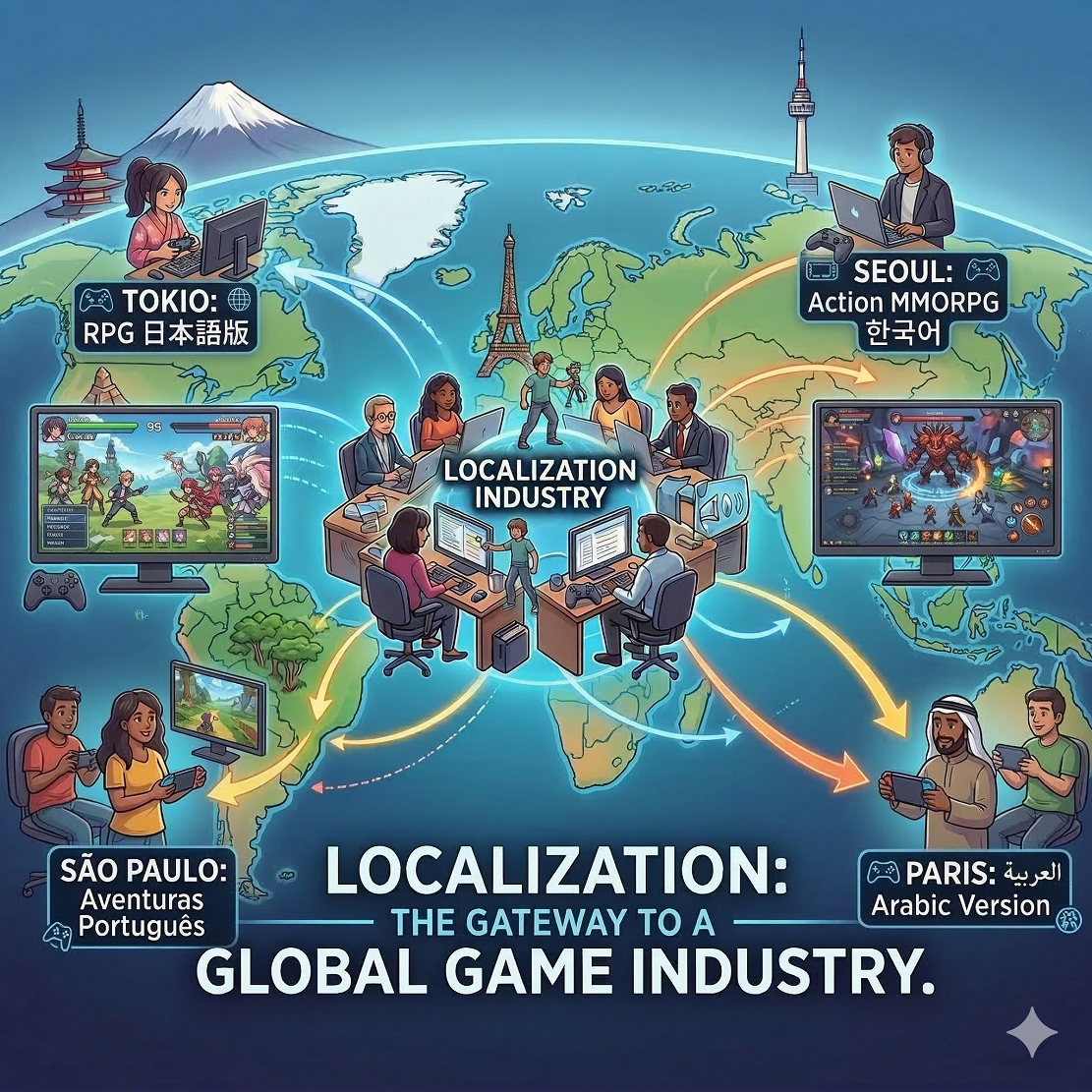
Games are more sophisticated. Films are more immersive. Digital products are more polished than ever. And yet, for millions of users around the world, the experience still feels… off.
Not because the product is bad. But because the language is.
The Problem No One Prioritizes Until It’s Too Late
In many industries (especially gaming, streaming, and digital products), localization is still treated as a final step. It happens after the product is finished, after the marketing is ready, and often under tight deadlines and shrinking budgets. At that point, translation becomes a task to complete, not a system to design.
This creates a predictable outcome. Even when the original content is excellent, the localized version feels rushed, inconsistent, or disconnected from the experience. Characters lose their voice, interfaces become confusing, and key messages lose their impact. What was meant to be immersive becomes fragmented, especially for users who rely on those translations to fully understand and enjoy the product.
The issue is not a lack of effort. It’s timing and structure. When localization is treated as an afterthought, quality becomes difficult to maintain, no matter how skilled the translator is.
The Freelancer’s Reality: Speed Over Value
From the freelancer’s perspective, this environment creates its own set of challenges. Many linguists are not struggling because of a lack of skill, but because of how their work is positioned within the process. They are often brought in late, expected to move fast, and evaluated primarily on cost rather than impact.
In this context, translation becomes transactional. There is little room to understand the product deeply, to ask questions, or to contribute strategically. The focus shifts toward delivering quickly instead of delivering thoughtfully. Over time, this not only affects quality, but also devalues the role of the translator, turning what should be a creative and analytical process into a mechanical one.
This is where frustration begins. Not because professionals resist technology, but because the system around them doesn’t allow them to use their expertise effectively.

The User Pays the Price
What often goes unnoticed is who ultimately absorbs the impact of these decisions: the end user.
When localization is poorly executed, the experience breaks in subtle but important ways. Instructions become unclear, humor doesn’t land, narratives lose coherence, and trust begins to erode. Users may not always identify the problem as “bad localization,” but they feel it. And that feeling directly affects engagement, retention, and perception of quality.
In global markets, this becomes even more critical. A product that feels natural and intuitive in one language can feel distant or confusing in another. This creates an uneven experience across regions, where some users receive the full value of the product, while others receive a diluted version of it.
At scale, this is not just a linguistic issue. It’s a business issue.
The Illusion of “Good Enough”
With the rise of AI and machine translation, there’s a growing belief that “good enough” is sufficient for most use cases. And in some scenarios, it is. Raw translation can make content understandable quickly and at a low cost, which is undeniably valuable.
But understanding is not the same as experience.
A game that is “understandable” is not necessarily engaging. A product that is “readable” is not necessarily usable. The gap between those two is where quality lives, and where differentiation happens.
Relying entirely on low cost, high speed solutions often creates a false sense of efficiency. In reality, it shifts the cost elsewhere: into user frustration, brand inconsistency, and missed opportunities for deeper engagement in global markets.

A Better Approach: Structure Over Shortcuts
The solution is not to reject technology, nor to romanticize traditional workflows. The real opportunity lies in combining both intelligently.
When localization is approached as a structured process rather than a last minute task, everything changes. Content can be prepared with clarity, terminology can be defined early, and updates can be managed consistently across languages. Translators are no longer isolated contributors, but part of a system that supports quality and scalability.
This is where tools like translation management systems (TMS) become critical, not as replacements for human expertise, but as enablers of it. By organizing workflows, centralizing terminology, and maintaining consistency over time, these systems allow teams to move faster without sacrificing coherence.
The result is not just better translations. It’s a better product experience across every market.
A Win Win That Already Exists
When done correctly, localization doesn’t need to be a trade off between cost and quality. It becomes a shared advantage.
- Freelancers gain structure, context match, and the ability to deliver higher value work
- Companies gain consistency, scalability, and more predictable outcomes
- Users gain a seamless experience, regardless of language
This alignment is what the industry has been missing, not better tools alone, but better integration of those tools into the process.
Localization works best when it stops being invisible.

Final Thought
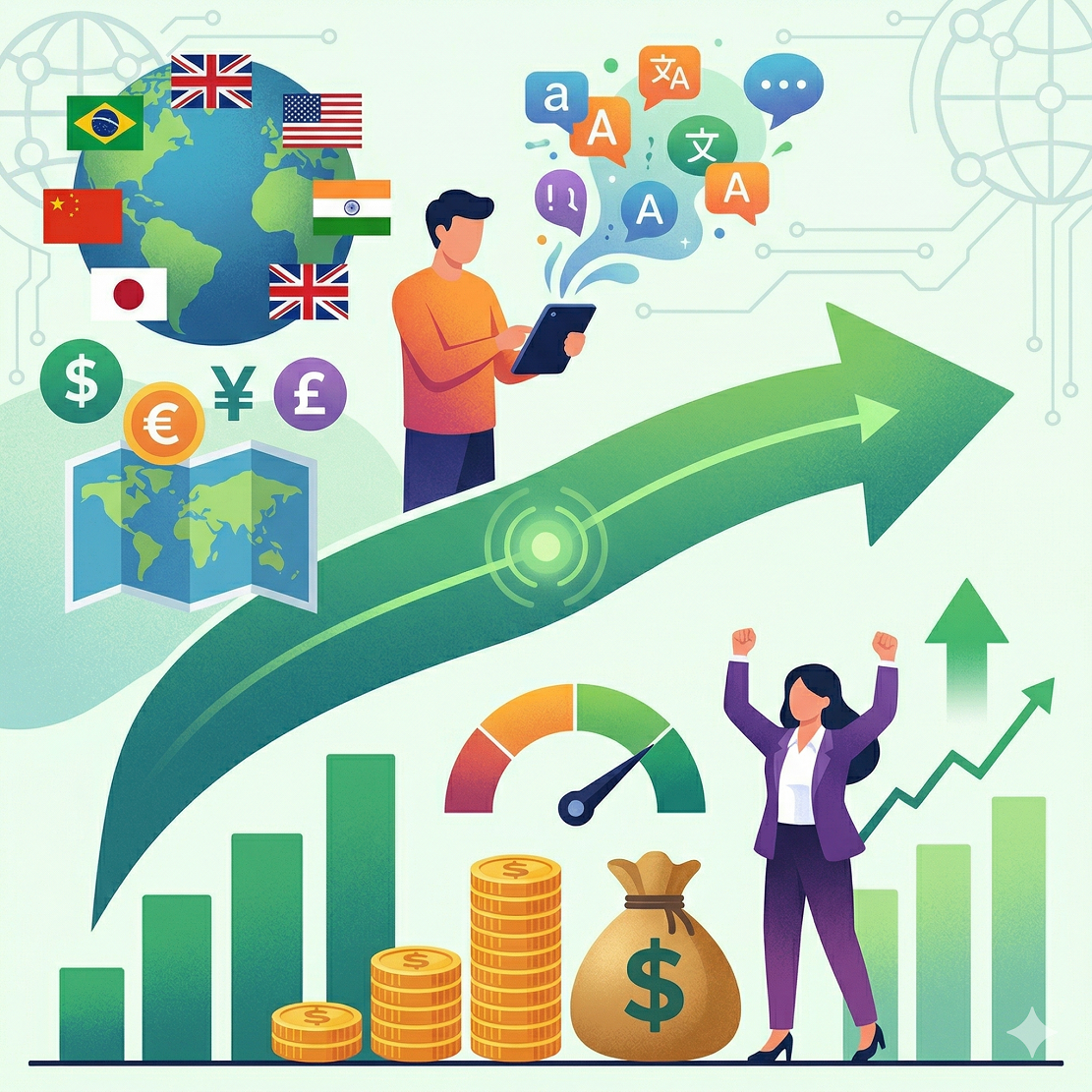
The question is not whether localization delivers ROI. It’s whether it’s being given the conditions to do so.
Because when language is treated as part of the product, not an afterthought, it stops being a cost. It becomes a multiplier.
If your team is looking to improve how localization fits into your product and content workflows, wxrks offers the infrastructure to make that possible.
By combining structured workflows, terminology management, and scalable language operations, you can move beyond fragmented translation efforts and start building consistent experiences across every market.
Create your account and bring structure to your localization process.
Unlock the power of glocalization with our Translation Management System.
Unlock the power of
with our Translation Management System.