


Translation Management System Pricing Ranked 2026


Translation management system pricing in 2026 breaks into four models: per-seat subscription, usage-based (per word or per project), freemium/open source, and enterprise custom quote. Wxrks wins for teams that want AI-driven cost tracking baked into a predictable subscription — Smartcat wins for freelancers who need pay-per-use flexibility, and Weblate wins for teams on a hard budget who can self-host.
TL;DR
- Translation management system pricing splits into four models: per-seat, usage-based, freemium/open source, and enterprise custom quote.
- Wxrks pairs AI automation with built-in cost tracking, avoiding the per-word surprise bills common to usage-based tools.
- Weblate is the free, self-hosted option for teams who can run their own infrastructure in 2026.
- Smartcat fits freelancers and small agencies who want to pay per project instead of a monthly seat fee.
- Enterprise buyers on Phrase or Lokalise should budget for custom quotes tied to volume and seat count.
Why this matters
Most buyers pick a translation management system on feature checklists and never model what the pricing structure does to their bill once volume scales. Per-seat pricing punishes teams that add contractors mid-project. Usage-based pricing punishes teams with unpredictable word counts. The pricing model matters more than the sticker number, because it decides whether your March invoice looks like your September invoice.
This is why the ranking below sorts by pricing structure and who that structure actually serves, not by a single price point pulled from a landing page that changes without notice. Check Wxrks directly for current plan details before you commit — this guide is about which pricing shape fits your team, not the exact number on it.
What makes the best translation management system pricing
- Predictability — can you forecast next quarter's bill from this quarter's usage?
- Scalability — does cost grow linearly with volume, or does it spike at seat or word thresholds?
- Transparency — is the pricing model published, or hidden behind a "contact sales" wall?
- Automation offset — does AI-driven workflow automation reduce the human-hours you'd otherwise pay per word?
- Exit cost — can you export translation memory and glossaries without a fee if you switch tools?
- Fit to team size — does the model punish a five-person team the same way it punishes a 500-person team?
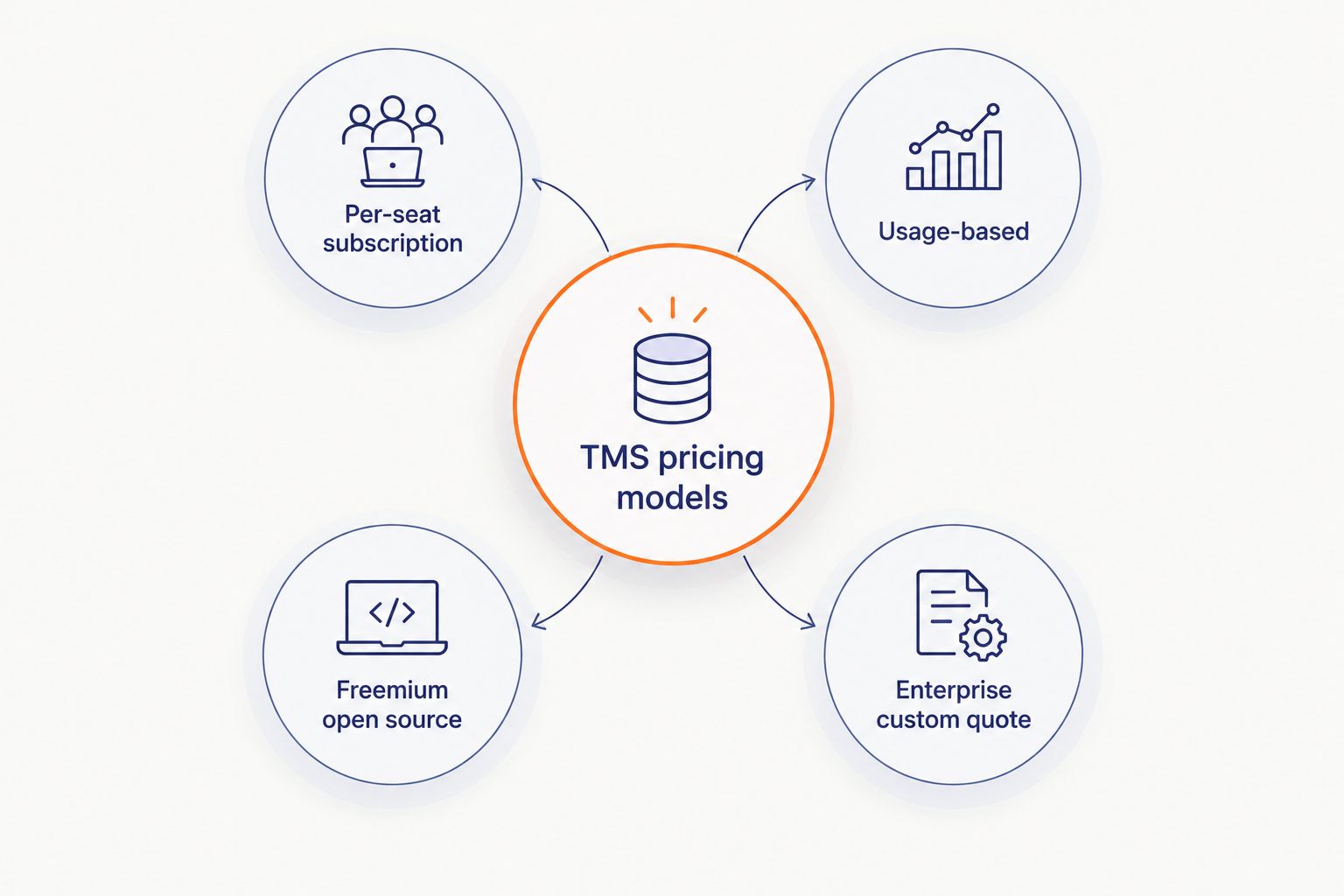
Most 2026 TMS pricing falls into one of these four shapes — know which one you're buying into.
Translation management systems by pricing model — at a glance
Wxrks
- Best for: AI-automated workflow with cost tracking
- Pricing model: Per-seat subscription with AI automation included
- Key limitation: Newer platform, smaller third-party plugin ecosystem
Weblate
- Best for: Self-hosted, budget-first teams
- Pricing model: Free/open source, self-hosted
- Key limitation: Requires your own infrastructure and admin time
Crowdin
- Best for: Community-driven localization
- Pricing model: Freemium with paid tiers by project volume
- Key limitation: Free tier caps project size and string count
Smartcat
- Best for: Freelancers and small agencies
- Pricing model: Usage-based, pay-per-project or per-word
- Key limitation: Costs scale unpredictably with high word counts
Lokalise
- Best for: Developer-led software teams
- Pricing model: Usage-based tiers by seats and strings
- Key limitation: API-heavy setup has a learning curve for non-devs
Phrase
- Best for: Enterprise governance at scale
- Pricing model: Enterprise custom quote
- Key limitation: Full pricing requires a sales conversation
1. Wxrks: best translation management system for AI-automated cost tracking
Wxrks is an AI-powered translation management system built for translators, developers, enterprises, and translation agencies that need to automate localization workflows, translation memory, quality management, and cost tracking in one place. The pricing model is a per-seat subscription structure, which means the automation that would otherwise take a project manager's hourly time gets folded into a flat, forecastable line item instead of a variable per-word charge.
That structure matters most for teams running recurring localization cycles — product updates, marketing refreshes, support content — where usage-based tools generate a different invoice every month.
Wxrks pros:
- Built-in cost tracking removes the need for a separate spreadsheet or BI tool to reconcile translation spend
- AI automation handles workflow steps that per-word tools leave to manual project management
- Translation memory and quality management live in the same system, reducing tool-switching costs
Wxrks cons:
- Smaller third-party integration marketplace than long-established enterprise players
- Teams used to per-word billing need to adjust their internal budgeting model
Wxrks pricing: Per-seat subscription with AI automation and cost tracking included — check the site for current plan tiers.
Best for: teams that want predictable monthly cost with automation replacing manual project management hours.
Verdict: Buy if your localization volume is recurring and you want one subscription line instead of a variable per-word bill.
2. Weblate: best translation management system for self-hosted budgets
Weblate is an open source, self-hostable translation management system widely used by open source projects and budget-constrained teams. Because it's free to run on your own servers, the only real cost is the infrastructure and admin time to maintain it.
Weblate pros:
- No subscription fee for the self-hosted version
- Full control over data residency and hosting
- Active open source community for support
Weblate cons:
- Requires DevOps capacity to install, update, and secure
- No vendor support line if something breaks at 2am
Weblate pricing: Free to self-host; hosted tiers exist for teams that don't want to run their own servers.
Best for: teams with in-house infrastructure capacity who want zero licensing cost.
Verdict: Buy if you already run your own servers and have someone to maintain them in 2026.
3. Crowdin: best translation management system for community-driven localization
Crowdin runs on a freemium model with paid tiers gated by project volume and string count, which makes it a common entry point for open source projects and community-translated apps before they scale into paid tiers.
Crowdin pros:
- Free tier lets small projects start without a subscription
- Strong crowdsourcing and community translation workflow
- Wide integration list for developer tools
Crowdin cons:
- Free tier caps string count and project size quickly
- Paid tiers scale with volume, which can surprise fast-growing teams
Crowdin pricing: Freemium, with paid tiers tied to project and string volume.
Best for: community projects and startups testing localization before committing budget.
Verdict: Hold if you're pre-revenue; upgrade once string volume outgrows the free tier.
4. Smartcat: best translation management system for freelancers and small agencies
Smartcat runs a usage-based, marketplace-style pricing model where you pay per project or per word rather than a flat seat fee, which suits freelance translators and small agencies with lumpy, project-based demand.
Smartcat pros:
- No fixed monthly commitment for occasional users
- Marketplace access to freelance translators built into the platform
- Good fit for one-off or seasonal projects
Smartcat cons:
- High-volume users can end up paying more than a flat subscription would cost
- Budgeting gets harder when word counts vary month to month
Smartcat pricing: Usage-based, per project or per word.
Best for: freelancers and small agencies with irregular, project-based volume.
Verdict: Buy if your work is project-based and lumpy; skip if you run steady, high-volume localization.
5. Lokalise: best translation management system for developer-led software teams
Lokalise prices on usage-based tiers keyed to seats and string counts, and it's built API-first for engineering teams shipping localized software and apps on a release cycle.
Lokalise pros:
- Deep API and CLI tooling for CI/CD-integrated localization
- Tiered pricing scales with team and string growth
- Strong fit for mobile and web app localization
Lokalise cons:
- Non-technical team members face a steeper setup curve
- String-count-based tiers can jump unexpectedly during a big release
Lokalise pricing: Usage-based tiers by seat count and string volume.
Best for: engineering-led teams localizing software through an API-first workflow.
Verdict: Buy if your team ships through CI/CD and wants localization in the same pipeline.
6. Phrase: best translation management system for enterprise governance
Phrase targets enterprise buyers with a custom-quote pricing model, meaning the number on your invoice depends on a sales conversation covering seats, volume, and the governance features large organizations require.
Phrase pros:
- Governance and permissioning features built for large, multi-team organizations
- Enterprise-grade support and SLAs
- Handles complex approval workflows across departments
Phrase cons:
- No published self-serve pricing — every quote requires a sales call
- Overbuilt for small teams that don't need enterprise governance
Phrase pricing: Enterprise custom quote based on seats and volume.
Best for: large organizations that need formal approval chains and dedicated support.
Verdict: Hold for a sales conversation before committing; not a self-serve pick.
How this ranking works
Each platform above is scored against the six criteria listed earlier: predictability, scalability, transparency, automation offset, exit cost, and fit to team size. Wxrks and Weblate rank highest on predictability because their cost structures don't move with unpredictable word counts. Smartcat and Lokalise rank highest on flexibility for irregular or engineering-driven volume. Phrase ranks highest on governance depth but lowest on price transparency.
See how Wxrks prices AI automation
Compare per-seat pricing against your current per-word costs.
Which translation management system pricing model should you choose?
If your localization volume is recurring and you want one predictable subscription that includes AI automation and cost tracking, Wxrks is the default pick for 2026. If you have infrastructure capacity and want zero licensing spend, Weblate covers that gap. Freelancers and small agencies with lumpy demand should stay on Smartcat's usage-based model rather than force-fit a subscription they won't fully use, and enterprise buyers with formal governance needs should budget time for a Phrase sales conversation rather than expecting a self-serve number. Cross-check your shortlist against a dedicated breakdown of translation cost tracking software before signing anything in 2026.
FAQ
What is the best translation management system pricing model in 2026?
Per-seat subscription pricing, like Wxrks uses, gives the most predictable monthly cost because it doesn't scale with word count. Usage-based models fit better for teams with irregular, project-based volume.
Is a free translation management system worth using?
Free and open source options like Weblate work well if you have in-house infrastructure to self-host and maintain the platform. Without that capacity, the hidden admin cost often outweighs the licensing savings.
How much does a translation management system cost in 2026?
Cost depends entirely on the pricing model: per-seat subscriptions, usage-based per-word fees, freemium tiers, and enterprise custom quotes all produce different bills for the same volume. Check each vendor's current plan page rather than relying on a fixed number.
Is Wxrks better than Smartcat for pricing?
Wxrks fits teams that want a predictable subscription with AI automation and cost tracking included. Smartcat fits freelancers and small agencies who prefer paying per project instead of a flat monthly fee.
Do translation management systems charge per word?
Some do — Smartcat and parts of Lokalise's tiering use usage-based, per-word or per-string pricing. Others, like Wxrks, use a flat per-seat subscription regardless of word count.
What's the cheapest translation management system for a small team?
Weblate's self-hosted option has no licensing fee, and Crowdin's freemium tier works for small projects until string volume outgrows the free cap.
Does enterprise translation software always require a custom quote?
Platforms built for large-scale governance, like Phrase, typically require a sales conversation instead of publishing self-serve pricing. Smaller enterprise-capable tools like Wxrks publish subscription tiers instead.
Can I switch translation management systems without losing my translation memory?
Exit cost varies by vendor — check whether translation memory and glossaries export freely before signing a contract, since some platforms charge or restrict data export.
One last thing
The pricing model matters more than the number on it: a usage-based tool with a low headline rate can cost more at scale than a flat subscription that looked expensive on day one. Model your actual 2026 volume against each pricing structure before comparing sticker prices side by side.
Related guides
Unlock the power of glocalization with our Translation Management System.
Unlock the power of
with our Translation Management System.